I first heard the expression “But does it play in Peoria?” in my college Movie History class about Broadway plays. That said, Peoria was America’s test market back in the old-time radio days. The Midwest region as a whole serves as America’s testing ground; Columbus and Peoria are two examples within broader regional patterns.
Peoria was picked because the city was considered pretty much middle America — folks with average incomes who bought whatever stuff they saw on TV and radio. So if a cereal box, soap commercial, or even a catchy jingle got people buying in Peoria, companies figured it would do fine elsewhere too. That’s why you see lots of big brands mentioning Peoria as their testing ground: if it works there, the rest follows.
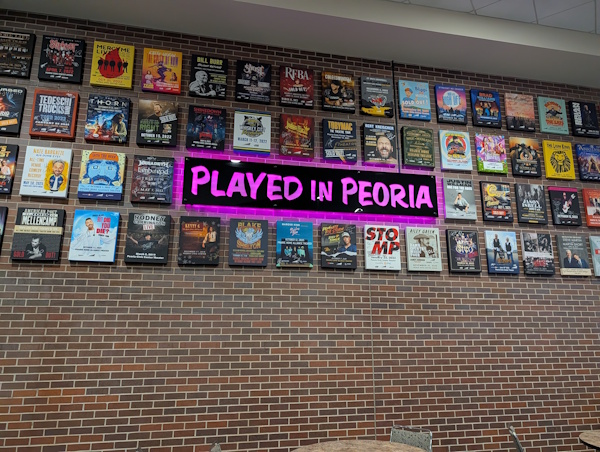
The idea was simple enough — put your product in front of folks who don’t have any particular brand loyalty and watch what happens. Companies had no way to measure exactly how many people saw an ad or bought a product back then, so they’d just go by sales figures and word-of-mouth. If the numbers were good, they’d roll it out nationally; if not, scrap it and try something else. It was a pretty crude method compared with all the data we have today, but it did the job for most companies before digital tracking took over.
Today things are different — Columbus, Ohio has taken on that role, especially for food products source. You can see it everywhere: Chipotle opened its first burger spot in Lancaster as a test; Burger King tried those tiny sliders here before they ever went nationwide; Wendy’s and White Castle have both run experiments close to their headquarters; Taco Bell once tested Tajín shells exclusively around Columbus; and even Donatos debuted a pizza-making robot at the airport.
What makes a city like Columbus or Peoria so useful for test markets is mostly demographic — they sit right where you want them, with urban neighborhoods next to suburban sprawl and some rural areas nearby, all within easy driving distance. That means if something works here it’s reasonable to expect it’ll work elsewhere too because the mix of people is pretty close to the national average demographics. You also get affordable living costs backed by strong local industries that keep folks working, plus a diverse population — young professionals, students, families, lawmakers, and immigrants from around the world — so you’re getting a snapshot of America in one region.
According to the article, Columbus has an identity crisis going on right now, which could become a disadvantage if companies want to test products that appeal specifically to certain groups. You can’t ignore demographic reality just because the rest of the city looks good; you need honest numbers about who’s buying what before making big expansion decisions. We might see the preferred test market shift again.
Data has changed everything since the Peoria days — now companies track exactly how many people see an ad or buy a product, they can test online in addition to physical stores, and algorithms or models help them decide what will work best well before any real-world launch. Yet the core concept hasn’t really shifted: if something sells well in one region with typical demographics, it’s still a good bet for broader adoption. The difference is just that we’ve added precision around how we measure success, not fundamentally rethought why Peoria and places like Columbus work so well as testing grounds.
Looking at what we’ve seen — Peoria as a historic test market, Columbus taking over in recent years for food industry experiments, the way data has refined but not replaced those methods — the Midwest really does represent America pretty well. It also makes it kind of fun to be first and get more variety with ’limited time’ runs. The rest of the country looks to us because we’re honest about what works and doesn’t work, we don’t pretend anything’s perfect just to be trendy, and we stick with practical solutions that real people can understand. That’s not some grand pronouncement — it’s just how life plays out here day in and day out, one test at a time.