A compost tumbler is worth the investment if you’re tired of hauling bags of soil or buying expensive compost. I’ve had this Miracle-Gro one for years and use it nearly every day.
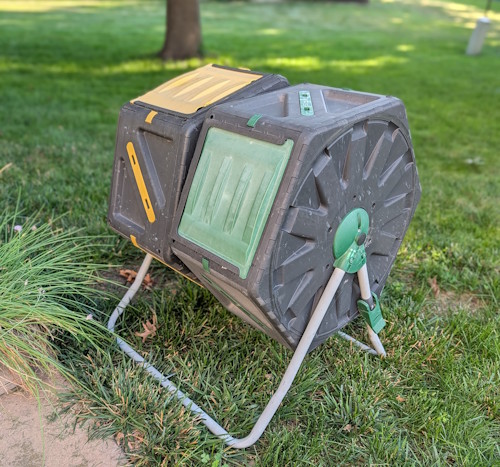
The two separate containers can be spun to break down scraps into rich soil faster than any pile on the ground. With the two compartments, I add scraps to one side and let the other one cook. When it’s done, I empty out the finished soil and then add vegetable and fruit scraps and yard waste while the other side breaks down. It barely takes up any space in the backyard, gives you great soil to use, and helps your inside trash can smell less.
Why Compost at All?#
According to the EPA, food scraps and yard waste together make up more than 30% of what Americans throw away. In a landfill, that material breaks down without oxygen and produces methane, a powerful greenhouse gas. In a compost bin, the same scraps turn into dark, crumbly soil that feeds your garden. Less trash, less smell in the kitchen, and free fertilizer. It’s hard to find a better deal.
Why a Tumbler Instead of a Pile?#
A traditional compost pile works, but it takes up space, needs to be turned with a pitchfork, and can attract animals. A tumbler solves most of that:
- Turning is easy. A few spins mixes everything and adds oxygen, which speeds things up.
- It’s enclosed. Raccoons, rodents, and the neighbor’s dog have a much harder time getting in.
- It’s off the ground. No digging, and it’s easy to dump the finished compost right into a wheelbarrow.
- Two chambers keep things moving. One side can finish while you keep filling the other.
Beginner Tips#
Composting is mostly about balance. You want a mix of “greens” and “browns”:
- Greens are wet and rich in nitrogen: fruit and vegetable scraps, coffee grounds, tea bags, and fresh grass clippings.
- Browns are dry and rich in carbon: dry leaves, shredded paper, cardboard, straw, and sawdust from untreated wood.
A good rule of thumb is to add more browns than greens by volume. If your compost gets slimy and smelly, it’s too wet, so add more browns. If it’s dry and nothing is happening, add some greens or a little water. It should feel like a wrung-out sponge.
Keep these out of a backyard bin: meat, fish, bones, dairy, oils and grease, pet waste, and diseased plants. They can smell, attract pests, or spread problems to your garden.
Saving a few bags of shredded leaves in the fall gives you browns to mix in all year. Cutting scraps into smaller pieces also helps them break down faster.
The Payoff#
When a batch is done, it looks and smells like rich, dark soil. You can mix it into garden beds, spread a thin layer on the lawn, or use it in containers. Every scoop is soil I didn’t have to buy, bag, and haul home from the store. After years of using this tumbler, it’s one of the most useful things in my backyard.
#CommissionsEarned