There is a lot of satisfaction in a long summer road trip. The straightforward reality of getting on the road, having a clear path ahead, and seeing the country for what it actually looks like, feels like making progress in your travels. I was looking to avoid a stretch of construction on an interstate and benefit from a more direct route across the state. This summer, I our vacation destination was on the other end of a proper road trip through the heart of the Midwest. We saw the real Illinois, the deep heart of Indiana, and the rolling landscapes of Ohio. It varied from farmland to factories, 1-stop sign towns to cities with skylines.
The Midwest can be more than just a place to drive through to get somewhere else. You can feel it in the way the land shifts from flat farmland to heavy industrial zones. You can see it in the way the towns are laid out, built by people who knew how to work a tool and how to build something that would outlast them. My goal was to see the transition. I wanted to see how these places were holding up, how they were changing, and what it felt like to see the layers of time stacked on top of one another.
At some point into Ohio, the scenery began to tighten up. The wide, open fields gave way to the heavy presence of the industrial corridor. This is the backbone of the region. It is a land of steel, heavy machinery, and the deep, steady work of production. You start to see the signs of the Rust Belt, that area where the old engines of American industry are still cooling down. Those towns were the reason the country grew, and there is a dignity in that history that you cannot just erase.
I ended up in a town that perfectly illustrated this duality. It was a place with a visible line drawn through it, almost like a seam in a well worn piece of clothing. On one side of the main road, the past was leaning heavily into the present. There were these massive factories and warehouses that looked like they were losing a slow fight with time. The walls had jagged holes in them, and the roofs were caving in, creating hollow shadows where there used to be the roar of machines and the heat of production. It was a bit of a sad reminder of a better yesterday, a time when these buildings were the lifeblood of the community and provided a steady living for every family on the block.
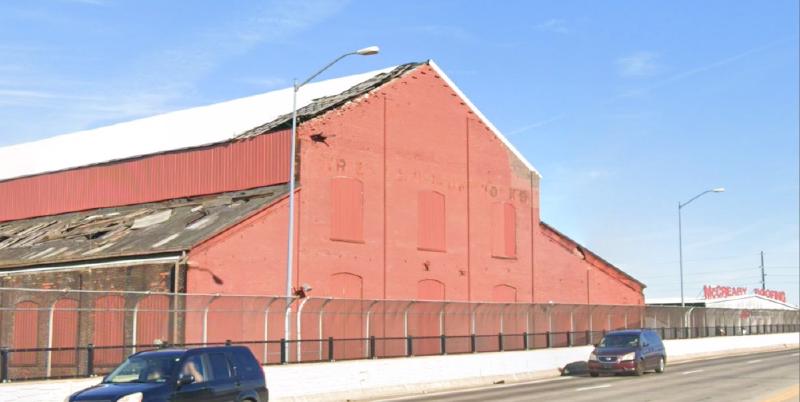
It is hard not to feel a bit of a tug in your chest when you see a place like that. You can see the scars of the economic shifts and the way the world moved on. But if you turn your head just a bit to the other side of town, the story changes. On the other side, the town was reaching for the future. There were modern buildings with clean lines, new services, and fresh construction. It was a different world, one that felt bright and full of movement. What looked like a recently remodeled car dealership had closed up and had a sign on it with their new location. Was the remodel a failure and the move a surrender or were they just adapting to the modern city?
This is the reality of the Rust Belt. It is not a graveyard. It is a living, breathing transition. The people who live here are not just mourning what was lost; they are actively building what comes next. They are taking the bones of the old world and finding ways to make them useful for the new one. It is a display of pure Midwest practicality. You don’t throw away what works, and you don’t give up on a community just because the old way of doing things changed. You adapt. You find a way to keep the lights on and keep the town moving forward.
I spent some time driving through the town to see how it was organized. You could tell the growth had moved toward the interstate, but I took the time to follow the stretch through the old downtown. I checked out several landmarks that were just built right into the neighborhoods. It was clear that people were just living their lives with what they had. There was a humble, modest feel to it all. It was peaceful.
There is something to be said for knowing the dirt behind the things we see. When you see a modern building next to a ruined factory, you are seeing the truth of our economy. You are seeing the cost and the reality of change. It is not some polished image you see on a commercial. It is the real deal. It shows that success is not always a straight line. Sometimes it involves watching things break down while you are trying to build something new. It requires a lot of grit and a lot of patience.
I found myself feeling a sense of respect for that town. It is easy to drive past and see only the decay, or to look at the new construction and think it is a sign of some grand rebirth. But the truth is in the middle. It is in the way the people keep showing up every day to do the work. They are the ones who keep the shops open, who maintain the roads, and who make sure the next generation has a place to call home. They are the ones who turn the page without tearing out the previous chapters.
As I headed out of town and back onto the interstate, the sun began to dip low in the sky behind me. The impression of the town stayed with me. I had seen the reality of the Midwest, and it was a beautiful, complicated thing. It is a place of hard work and honest history. It is a place where you can see the mistakes of the past and the hopes of the future sitting side by side. It is not always pretty, and it is not always easy, but it is real.
The goal of a road trip like this is not to find a perfect landscape. It is to find a real one. It is to see the way we live, how we build, and how we endure. Whether it is a factory with a hole in its wall or a new hospital with a modern look, both are part of the story. They are both part of the reason we have a country to live in. I am glad I took the time to see it all. It reminded me that there is a lot of strength in staying put and finding a way to make it work, no matter what the weather or the economy throws at you. Endurance is the ultimate Midwestern way of life.