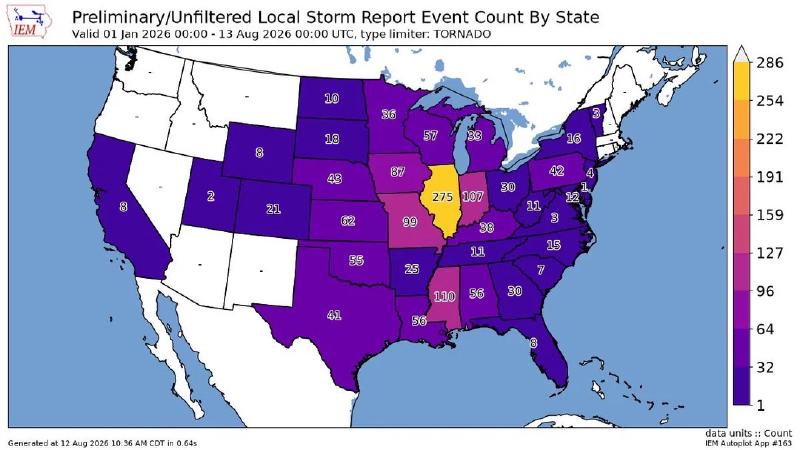
This year has been crazy weather-wise. We went from a drought last year to what feels like a flood of storms this year, and both extremes make life harder. You hear about the “shifting Tornado Alley,” and the data really does reflect a move toward the Midwest, with Illinois as the bullseye.
When the wind, hail, and lightning start coming more often, it’s a sign that our traditional ways of planning for the seasons are being tested by a changing reality.
What “Shifting Tornado Alley” Means#
For generations, “Tornado Alley” meant the southern Great Plains: Texas, Oklahoma, and Kansas. That’s where the classic storm-chaser footage came from. But researchers have been tracking a change over the last few decades. Tornado activity has been decreasing in parts of the traditional Plains alley and increasing farther east, across the Mississippi and Ohio Valleys and into the Midwest and Southeast. A widely cited 2018 study by researchers at Northern Illinois University and NOAA’s National Severe Storms Laboratory found significant increases in tornado frequency in parts of the Midwest and Southeast since 1979.
That matters because the eastern half of the country is different from the open Plains. There are more people, more trees and hills that block the view of an approaching storm, and more tornadoes that happen at night, when people are asleep. Those factors make tornadoes here more dangerous, even when they’re not more powerful.
The Cost Shows Up on Everyone’s Bill#
This shift has very real consequences for everyone’s wallet. For farmers, it can mean damaged crops, buildings, and equipment, plus more uncertainty for the next season. For everyone else, it means insurance premiums are going to keep climbing as more roofs need to be replaced and cars take damage. Some insurers have raised deductibles for wind and hail damage or pulled back from certain areas entirely.
It’s a tough cycle to be in, and it shows how much our daily lives depend on the stability of our environment and the fairness of the systems we rely on. It’s not just bad luck, and now is the best time to do something about it.
How to Be Ready#
You can’t stop a tornado, but you can be ready for one:
- Have more than one way to get warnings. Outdoor sirens are designed to warn people who are outside, not to wake you up indoors. Turn on emergency alerts on your phone and consider a NOAA weather radio, especially for overnight storms.
- Know your safe spot. The best place is a basement or storm shelter. If you don’t have one, go to an interior room on the lowest floor with no windows, like a bathroom or closet.
- Keep a kit ready. Flashlights, batteries, water, a first aid kit, medications, sturdy shoes, and a phone charger.
- Know the difference between a watch and a warning. A watch means conditions are right for tornadoes. A warning means one has been spotted or indicated on radar. When there’s a warning, take cover now.
- Review your insurance. Check your wind and hail deductible, make sure your coverage would actually rebuild your home at today’s prices, and take a video inventory of your belongings.
Tornado season in the Midwest used to feel like something that happened to other people. Not anymore. A little preparation now beats scrambling when the sirens go off.
#ClimateChange