Container plants have it rough in a Midwest summer. A pot on a sunny patio can go from soaked to bone-dry in a single afternoon, and once a heat wave settles in, watering once a day often isn’t enough. I use two tools to keep up: terracotta watering spikes for slow, steady watering, and a good watering can for everything the spikes can’t handle.
Terracotta Watering Spikes#
Use these terracotta watering spikes with a bottle, and they will keep your plants watered throughout the day to help them survive the heat wave. They are also great to have while you’re on vacation!
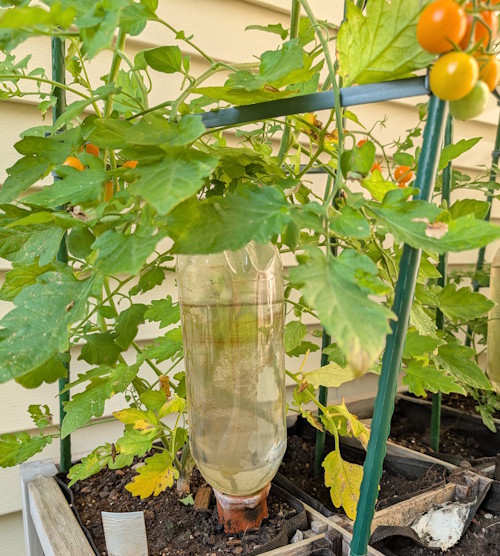
The idea is old. Gardeners have buried unglazed clay pots called ollas next to plants for centuries. Terracotta is porous, so water seeps slowly through the clay into the soil around it. When the soil is dry, it pulls water out faster. When the soil is already moist, it slows down. It’s a self-regulating system with no timers, batteries, or tubing.
Unlike watering with a can, these spikes allow a slow and steady release in response to the soil around them. This keeps the soil moist so the plants can absorb water gradually throughout the day. By providing a continuous supply rather than a single, heavy dose, the moisture reaches the roots and keeps them hydrated and resilient against the drying effects of the heat. When you pull the spikes out at the end of the season, you’ll see the roots found their way to the spike and grew toward the water, right around it. For me, this saved my plants when they were drying out too quickly in a garden table.
A few tips:
- Soak the spike in water before you push it into the soil so it starts wicking right away.
- Use a bottle that fits your plant. A small water bottle works for a small pot. A two-liter bottle buys you more time for a big planter or a long weekend away.
- Fill the bottle all the way and turn it over quickly so the water doesn’t drain out all at once.
- Check it the first few days. Every pot, soil mix, and spot in the sun drinks at a different rate.
The Perfect Watering Can#
The watering spikes are better for plants, but not every plant or container works with a spike. Seedlings, shallow trays, hanging baskets, and anything that needs a quick drink still call for a watering can.
I didn’t know that we could improve on the watering can. They all seemed to have the same annoying traits, like being made of weak plastic and having the handle block the fill hole. Then I came across the Chapin watering can and I changed my mind. It’s made out of recycled plastic with thick, strong walls. They also put the fill hole on the back side, where it’s not blocked by the handle! Everything else just works like a proper watering can should.
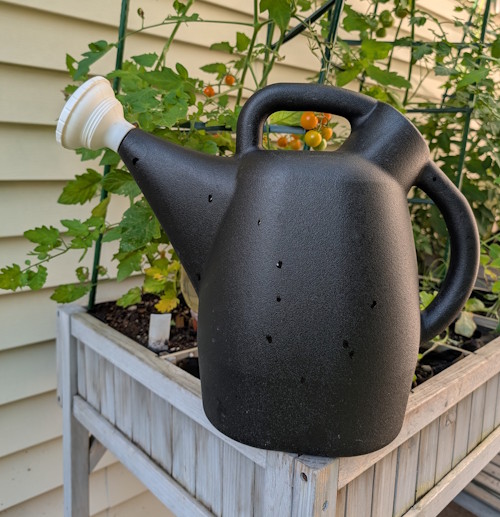
Being able to fill it under the spigot or rain barrel without tilting it sideways is one of those small things you don’t appreciate until you’ve used it. It also doesn’t flex and slosh when it’s full like the cheap ones do.
Using Them Together#
My routine is simple. The spikes do the everyday work on the pots that dry out fastest, and I go around with the can to top off everything else and refill the bottles. Between the two, my container garden makes it through July without me standing outside with a hose twice a day.
#CommissionsEarned